What happens when a model takes over a photo session
A few times I photographed people who instructed me on how I should take their portraits. Most of them had no idea about portrait photography, but that didn't stop them from posing and pointing to when to take a picture with a gesture worthy of an orchestra conductor
when I was only 20 years old I receive a portrait commission from an important magazine “Ruch Muzyczny” to take a portrait of a prominent music conductor Jerzy Katlewicz
This was an important photographic commission for me, as I just started to establish my position as a photographer in Krakow, Poland.
I was very excited about this chance, arranged a date for a session with his secretary,
Subsequently I came on time. Prepared my equipment. Jerzy Katlewicz, strolled energetically to a room, in which a session was due to take a place. We shook hands, and he instructed me where I should stand and shoot from, I checked the light and obligingly did as he told me. I felt it was all erroneous, but did not dare to object. I was too far from him, and the space didn’t contribute to the story. Yet I photographed as ordered, then Jerzy Katlewicz, moved away from the place close to the window and told me to change my position too. I went along with his command. Another film.
After less than an hour Session was over, I went home to my darkroom, feeling that I didn’t handle it professionally enough, and results were dismal. Not a single portrait was good, mercifully the commission wasn’t urgent (lucky for me). Got in touch with Jerzy Katlewicz, sincerely apologized, saying that those portraits would not give a justice to his personality and asked for an another session. In his kind generosity Jerzy Katlewicz, accepted my failure and arranged another session in a few days’ time. This time I made sure that Jerzy Katlewicz did not boss me about. But in a polite way took pictures as I choose. One of those portraits was later published.
This was one of most profound lessons in my career as photographer. Since that time, I worked with many strong personalities, who insisted on telling me how I should take their pictures, but that earlier experience taught me how to deal with this sufficiently effectively to come out with good editorial portraits, which were published.
And here is a story of such an encounter
I like working with people who think they know what is there to be known. I like their energy, willingness to act and naïve belief that by giving orders, they control others.
When I came to the BBC at the appointed time, Robert Kee was still in the meeting. I was taken to his office – a room lit by fluorescent lamps. After about 20 minutes, he quickly entered and sat down in a chair with his back to the window.
We had only met once before, at a party in Cambridge.
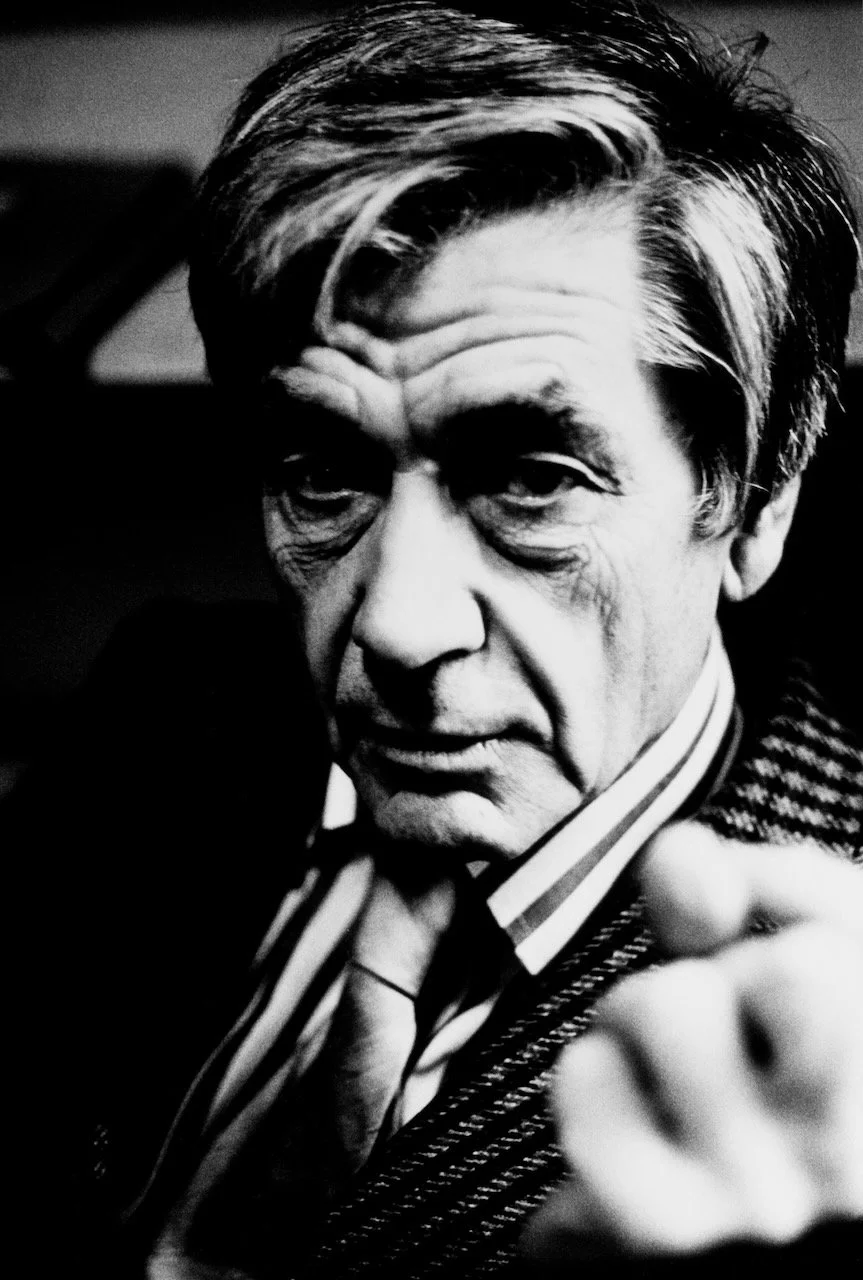
I was already prepared for the session, so I looked at him carefully with my camera in my hand. Kee straightened up and said something, but I don't remember what, because I interrupted him in mid-sentence, saying that the lighting in this room was terrible. There was silence. I checked the intensity of the light reflected from his face
with a light meter. After a while, I put the camera against my face and slowly moved around the desk towards the window, because I needed daylight while observing Kee through viewfinder.
"Oh, when will the photo be taken?! He exclaimed and turned to me.
At that exact moment, I pressed the shutter button.
You could say that Kee inspired this photo, though perhaps not in the way he imagined it.
But this is not always the case as when you take portraits of a person with whom you can achieve a productive rapport like it was while working with a famous actor and theatre director Simon Callow.
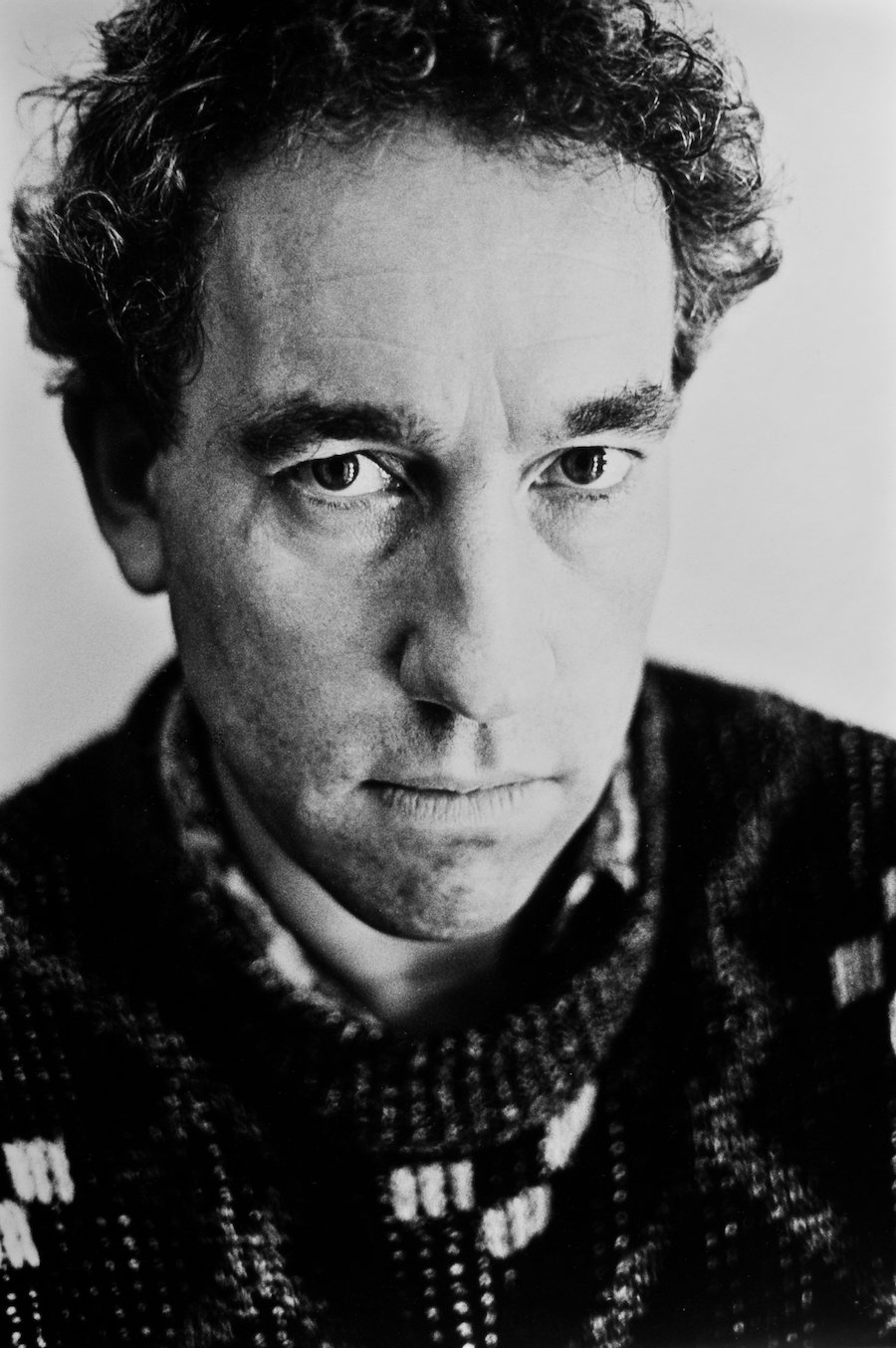
It is fascinating, but also tricky, to take portraits of a charismatic person who is hugely inspiring to others.
At the start of a session, when I focus on the eyes of my models, when I probe into their personalities, I can see their understanding of me reflected back. There is no room to be shaky in my gestures, in my command of technical aspects of photography, or in the instructions I give. If I were to become hesitant or unsure the session would fall apart instantly.
Probably for this reason, as if it were a ritual ceremony, I speak as little as possible and watch like a hawk the dynamics of the situation all around us, allowing the model to be himself. In this way, together, we are building the foundations of our brief relationship, the fountain of a true portrait.
Such was the session with Simon Callow, an English actor, writer and theatre director of astounding range, from Shakespeare to Goethe and modern authors. And as if all this were not enough, he has also written biographies of Oscar Wilde and Orson Welles.
When our short session at the National Theatre came to an end, I thanked Simon for his time, and he said;
"If I ever play a photographer, I'll be inspired by how you create portraits, how you work.”
I don't know if he ever did, but those words touched me. It was a huge compliment.